
Purchase Gear Give
Advancing Research and Care >

Understanding Profound Autism

AUTISTIC PEOPLE WHO REQUIRE 24/7 CARE THROUGHOUT THEIR LIVES HAVE PROFOUND AUTISM

Profound autism is not yet a medical diagnosis. More research is needed to establish a diagnostic category. The term profound autism was introduced to provide greater clarity and advance research for autistic people who require lifetime, 24/7 care.

Why the need for the term profound autism?

People with profound autism consistently experience unique, complex, and too often unseen challenges that require solutions, not only for them but for their caregivers.

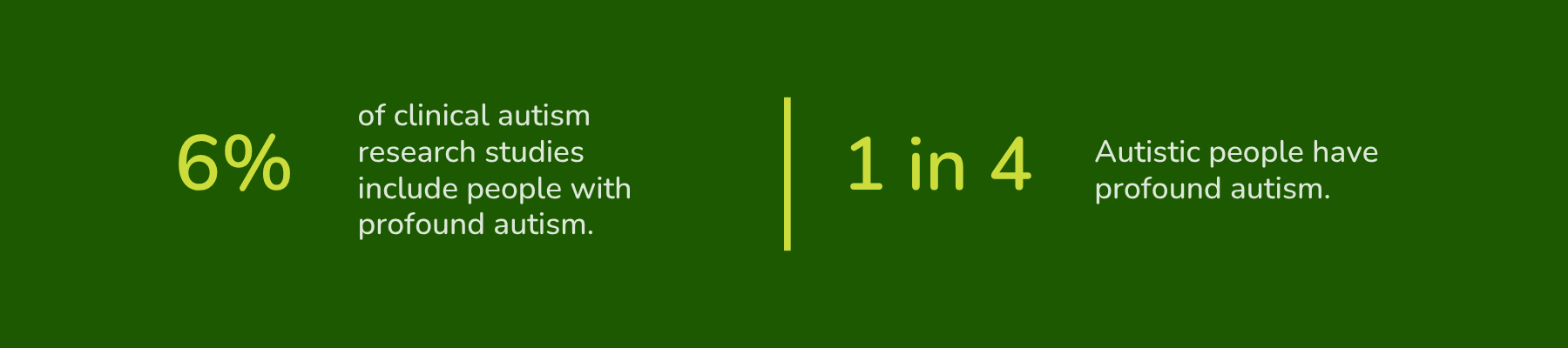
Research indicates that the proportion of studies that included those with profound autism has decreased significantly over time.

The continuing recognition of profound autism will open the doors to more inclusive research. Only then can targeted advocacy increase access to critically needed supports and services for this marginalized population.

Understanding profound autism

Why Definitions Matter

One of the most significant barriers to inclusion has been the lack of a shared research definition of profound autism. Without clear criteria, researchers have struggled to consistently identify and include individuals with the highest support needs in studies.

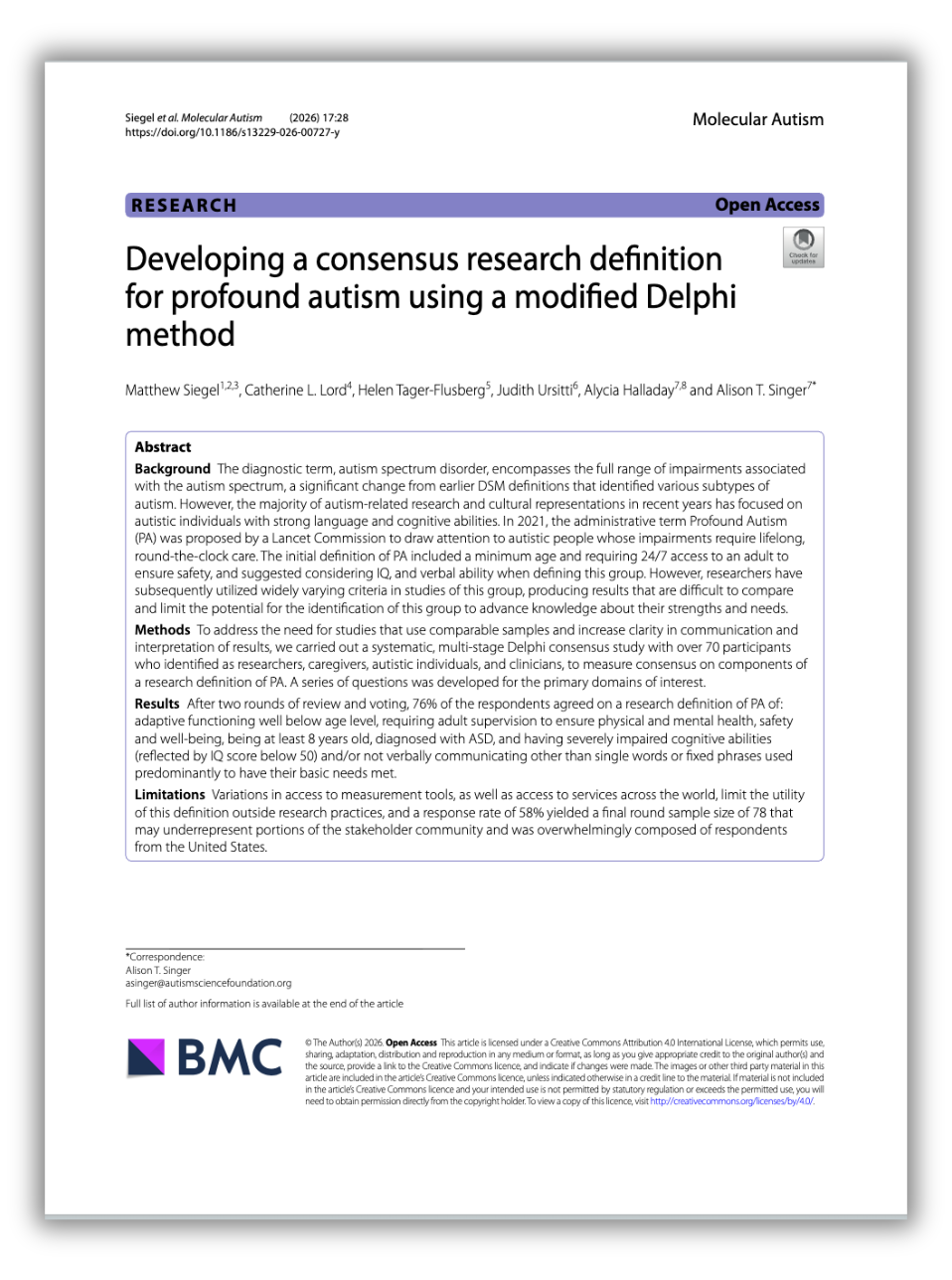
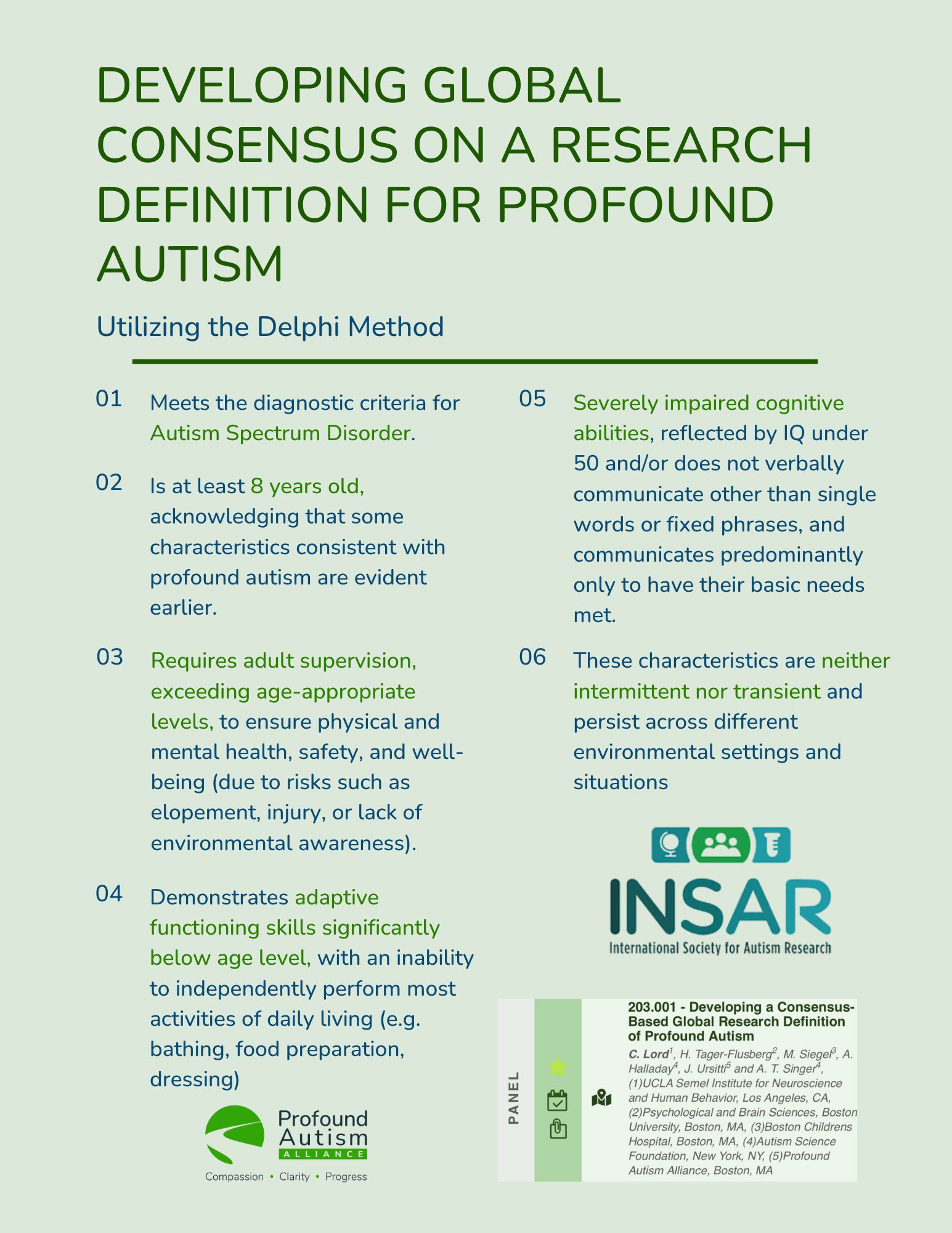
In 2025, a consensus research definition of profound autism was introduced at the International Society for Autism Research (INSAR) Annual Meeting. Developed through a multi-stakeholder process involving researchers, clinicians, autistic self-advocates, and family members, this definition provides a framework for consistent inclusion in research.

Profound Autism Alliance helped fund this foundational work, recognizing that shared definitions are essential for building a coherent and inclusive evidence base.

Importantly, this definition is a research tool, not a label for individuals. Its purpose is to support clarity, consistency, and inclusion in scientific studies.

Profound autism key facts

2025 Consensus On A Research Definition

At Profound Autism Alliance, our focus constantly remains on compassion, clarity, and progress for the people we love with profound autism. Now more than ever, clarity is needed in the world of autism research. People with profound autism are routinely excluded from clinical studies. And research that is meant to include our population frequently is inconsistent in defining it. Fortunately, a new and clear research definition for profound autism was introduced at a panel at the 2025 International Society for Autism Research Annual Meeting in Seattle. We are grateful to the many researchers who participated in this important consensus project over the last year and extend our thanks to the Autism Science Foundation, which partnered with us to fund this work.

Consensus Statement
Profound autism research and advocacy

2023
Centers for Disease Control Prevalence Study

Published April 2023[2]

Based on previous work by the Lancet Commission, the Centers for Disease Control released their first prevalence study on profound autism in April 2023.

The research concluded that:

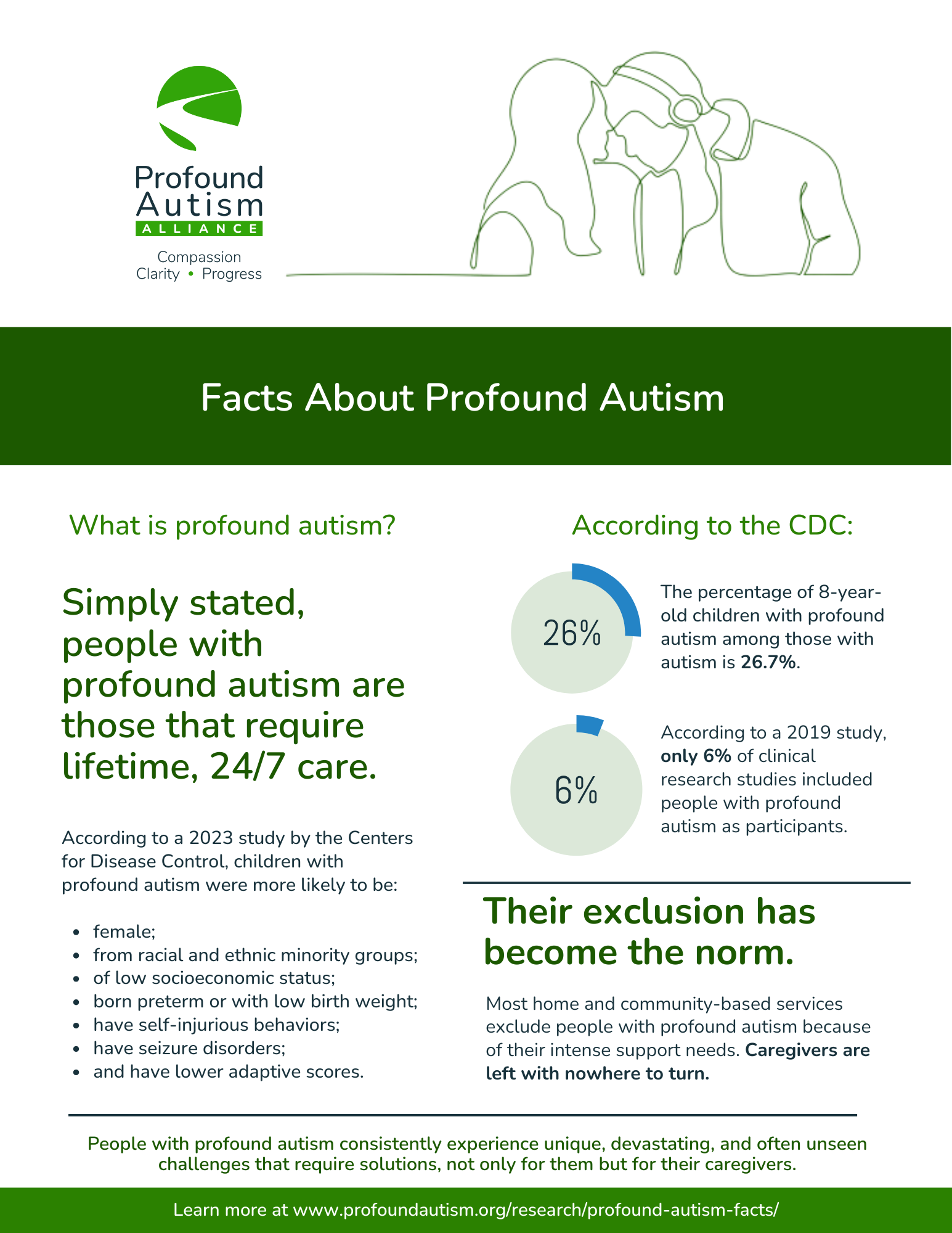
  • The percentage of 8-year-old children with profound autism among those with autism was 26.7%. This means that 1 in 4 children with autism have profound autism.
  • Compared with children with non–profound autism, children with profound autism were more likely to be:
    • female;
    • from racial and ethnic minority groups;
    • of low socioeconomic status;
    • born preterm or with low birth weight;
    • have self-injurious behaviors;
    • have seizure disorders;
    • and have lower adaptive scores.
Key facts about profound autism

2021

The Lancet Commission on the future of care and clinical research in autism

Published: December 6, 2021[1]

"Awareness of autism has grown monumentally over the past 20 years. Yet, this increased awareness has not been accompanied by improvements in services to support autistic individuals and their families. Many fundamental questions remain about the care of people with autism—including which interventions are effective, for whom, when, and at what intensity. The Lancet Commission on the future of care and clinical research in autism aims to answer the question of what can be done in the next 5 years to address the current needs of autistic individuals and families worldwide."


Lancet Commission Introduces a New Definition

The Commission proposes that the designation of profound autism be adopted as an administrative term to apply to children and adults:

  • Requiring 24-hour access to an adult who can care for them if concerns arise,
  • Being unable to be left completely alone in a residence and unable to take care of basic daily adaptive needs.

What the New Definition is Not

  • The term profound autism is not appropriate for young children.
  • It is not intended to describe other severe difficulties related to autism that might apply to individuals with extraordinary life circumstances, trauma, family conflict, scarcity of resources, or those with co-occurring mental health problems.
Profound autism support and research

From Research to Real-World Impact

Research inclusion matters because it directly influences what happens outside the laboratory.

When research reflects the realities of profound autism, it can:

  • Inform realistic service models and staffing expectations

  • Support workforce training that prepares clinicians to work with complex needs

  • Reduce reliance on crisis-driven care

  • Improve coordination across medical, behavioral, and educational systems

Profound Autism Alliance’s funding of the ECHO Autism® Intense Behavior series is one example of how research can be translated into practice—supporting clinicians with evidence-based training focused on severe emotional dysregulation, self-injury, and aggression.


Ongoing Gaps and Challenges

Despite recent progress, significant gaps remain:

  • Limited longitudinal research focused on adults with profound autism

  • Persistent workforce shortages

  • Inconsistent access to appropriate services across regions

  • Barriers to participation for families already under strain

Addressing these gaps will require sustained investment, inclusive research design, and collaboration across disciplines.


Looking Ahead

The state of the field is evolving.

With clearer research definitions, increased visibility, and intentional translation into training and practice, the foundation is being laid for research that better reflects the lives of people with profound autism and their families.

Profound Autism Alliance remains committed to advancing research that is inclusive, rigorous, and grounded in real-world impact, and to ensuring that progress in the field leads to meaningful change.

Profound Autism Fact Sheet

Our core values include compassion, clarity, and progress. Download our one page fact sheet to learn more about the term profound autism.

Get the Facts Here

for Researchers

SHARE YOUR RESEARCH

for everyone

Understanding Profound Autism

for Community Members:

 Profound Autism Research Participation

For prescribing physicians

Physician Training For Intense behaviors


[1] Lord C, Charman T, Havdahl A, Carbone P, Anagnostou E, Boyd B, Carr T, de Vries PJ, Dissanayake C, Divan G, Freitag CM, Gotelli MM, Kasari C, Knapp M, Mundy P, Plank A, Scahill L, Servili C, Shattuck P, Simonoff E, Singer AT, Slonims V, Wang PP, Ysrraelit MC, Jellett R, Pickles A, Cusack J, Howlin P, Szatmari P, Holbrook A, Toolan C, McCauley JB. The Lancet Commission on the future of care and clinical research in autism. Lancet. 2022 Jan 15;399(10321):271-334. doi: 10.1016/S0140-6736(21)01541-5. Epub December 6, 2021. Erratum in: Lancet. 2022 Dec 3;400(10367):1926. P.M.I.D.: 34883054.

[2] Hughes MM, Shaw KA, DiRienzo M, et al. The Prevalence and Characteristics of Children With Profound Autism, 15 Sites, United States, 2000-2016. Public Health Reports. 2023;0(0). doi:10.1177/00333549231163551

[3] Stedman, Amy & Taylor, Briana & Erard, Michael & Peura, Christine & Siegel, Matthew. (2019). Are Children Severely Affected by Autism Spectrum Disorder Underrepresented in Treatment Studies? An Analysis of the Literature. Journal of Autism and Developmental Disorders. 49. 10.1007/s10803-018-3844-y.


Questions? Please email us at [email protected]

Take Action